How to Choose the Right Dirt Track Class for You
Discover the best dirt track classes for your budget and skill level. From street stocks to late models, learn which racing class fits your Saturday night.
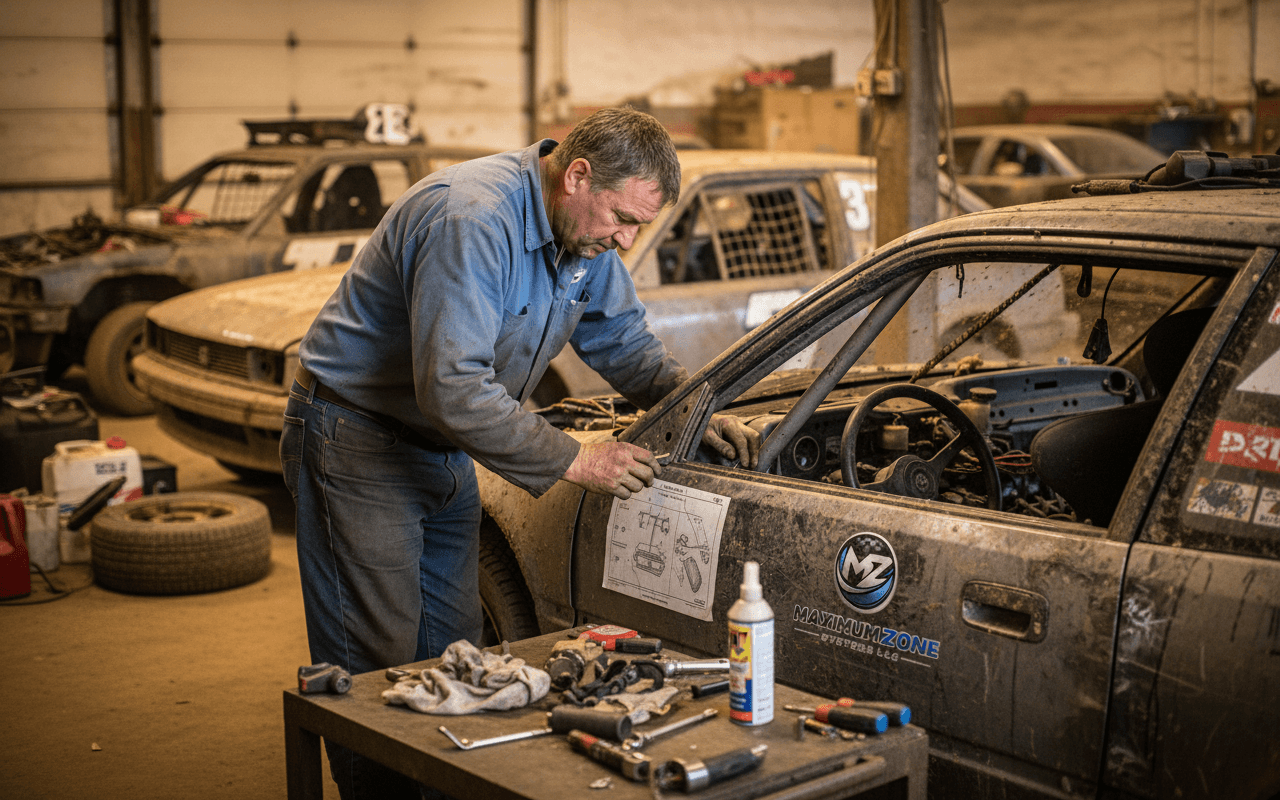
You’ve been in the grandstands long enough. You’ve turned wrenches for buddies, bought the pit food, and inhaled enough clay dust to last a lifetime. Now, you want your own car sitting in the garage. But when you look at the pit area on a Saturday night, you see everything from beat-up Honda Civics to $80,000 Late Models sitting in half-million-dollar stacker trailers.
So, which racing class is actually right for you?
If you're asking this question, you're already doing it right. Picking the wrong class is the fastest way to drain your bank account and kill your love for the sport before the season even hits mid-July. You need a class that matches your wallet, your wrenching ability, and your actual seat time.
Let's break down the most common dirt track classes at your local 1/4-mile or 1/2-mile oval. We’re skipping the sugar-coating and giving you the real numbers and expectations for beginner dirt racing.
The Reality Check: Budget vs. Time
Before you even look at a chassis or browse Facebook Marketplace, you need to answer two questions honestly:
- What is my initial build/buy budget?
- What is my weekly maintenance budget?
Buying the car is the cheap part. Keeping it on the track is what gets you. You need to account for tires, racing fuel, pit passes for you and your crew, bent suspension parts, and inevitable engine refreshes. If you blow your entire budget buying a top-tier Street Stock, you’ll be sitting at home the first time you bend a tie rod or blow a radiator.
Also, consider your equipment. Do you have an open trailer or an enclosed hauler? Do you have a welder, an air compressor, and the hand tools required to fix a wrecked car at 2:00 AM on a Sunday?
Always buy a used, proven car for your first ride. Do not build one from scratch. Let someone else take the depreciation hit. Now, let's look at the classes.
4-Cylinders / FWD / Hornets / Sport Compacts
If you want the absolute cheapest entry into beginner dirt racing, this is it. These are front-wheel-drive, 4-cylinder passenger cars (think Honda Civics, Chevy Cavaliers, Ford Focuses) that have been gutted, caged, and sent sideways.
- Initial Cost: $1,500 – $3,500 for a race-ready used car.
- Weekly Cost: $50 – $100 (mostly pump gas and pit passes). Tires last a long time.
- Skill Level: True beginner.
- The Vibe: It’s bumper cars on dirt. You will get hit. You will hit people.
Why choose this class? It gets you cheap seat time. You learn how to navigate traffic, how a track changes from the tacky heat race to the slick feature, and how to control a car in a pack. The mechanical side is dead simple. If you blow a motor, you go to the local pull-a-part junkyard, yank another 2.2L Ecotec for $300, and drop it in on a Tuesday night with your buddies.
Why avoid it? Front-wheel drive doesn't teach you throttle control the same way a rear-wheel-drive V8 does. If your ultimate goal is a Late Model or Modified, FWD habits can actually be hard to break later.
Hobby Stocks / Pure Stocks / Factory Stocks
This is the traditional starting point for rear-wheel-drive dirt track racing. These are full-framed, heavy American iron—usually metric chassis like a Monte Carlo, Grand Prix, or Regal.
- Initial Cost: $3,500 – $8,000 for a solid used roller or complete car.
- Weekly Cost: $150 – $300. You’ll start wearing out right-rear tires faster, and race fuel might come into play depending on engine rules.
- Skill Level: Beginner to Intermediate.
- The Vibe: Heavy cars, limited horsepower, and lots of momentum driving.
Why choose this class? This is where you learn how to set up a real race car. You’ll start messing with spring rates, shock valving, and weight percentages. Because the engines are usually restricted (two-barrel carbs, stock cast-iron heads, strict cam rules), you can’t just rely on horsepower to pass the guy in front of you. You have to learn how to drive a smooth line, hit your marks, and keep your momentum up.
Why avoid it? The rules can be a massive gray area. Tracks call them "stock," but some guys are spending $10,000 on "stock" engines that have been acid-dipped and heavily machined. Read your local track's rulebook carefully. If they allow too many aftermarket racing parts, the class can price out a true beginner fast.
Street Stocks / Super Stocks
Street Stocks might look like Hobby Stocks from the grandstands, but under the sheet metal, they are serious race cars. They still use a stock frame (or a stock front clip), but the engines are heavily built, the suspension is highly tunable, and the competition is fierce.
- Initial Cost: $8,000 – $15,000+ for a competitive used car.
- Weekly Cost: $300 – $500. You are buying tires frequently and running high-octane race fuel.
- Skill Level: Intermediate to Advanced.
- The Vibe: Extremely competitive. These guys have been racing in this class for 15 years and know every trick in the book.
Why choose this class? If you have some racing background (maybe you raced go-karts or pure stocks for a few years) and want a fast, heavy car that requires real car control, Street Stocks are a blast. You get to run aftermarket tubular control arms, racing shocks, and engines pushing 400 to 500 horsepower. It feels like real-deal racing.
Why avoid it? It’s expensive. You are competing against guys who have massive budgets and decades of notebook data. A top-tier Street Stock engine can cost as much as a brand new car. If you are just starting out, you will likely get lapped, and pulling into the pits a lap down gets frustrating quickly.
Dirt Modifieds (IMCA / UMP / USRA)
Open-wheel modifieds are the backbone of local dirt racing. You know them by their aggressive look: open front wheels, flat sheet metal sides, and massive right-rear tires. They are purpose-built tube-chassis race cars.
- Initial Cost: $15,000 – $30,000+ for a good used roller and engine combo.
- Weekly Cost: $400 – $800+. Tires, fuel, tear-offs, and suspension parts add up incredibly fast.
- Skill Level: Advanced.
- The Vibe: High horsepower, lightweight, and incredibly fast.
Why choose this class? It’s the closest thing to a Late Model without the Late Model price tag. Modifieds are highly tunable. A quarter-inch change in the trailing arm angle or a quick shock adjustment will completely change how the car drives. You get to run a 500+ horsepower engine in a lightweight tube chassis. If you want to travel to different tracks, Modifieds usually have standardized rules (like IMCA or UMP), making it easy to race anywhere in the country.
Why avoid it? The learning curve is brutal. Open wheels mean if you touch tires with another car, somebody is going airborne or breaking front-end parts. You need a dedicated crew, a solid shop setup, and a deep understanding of suspension geometry (roll centers, anti-squat, bite) to be competitive.
Late Models (Crate / Limited / Super)
This is the top of the food chain at Saturday night dirt tracks. Late Models are aerodynamically advanced, purpose-built, high-horsepower monsters that glide around the track.
- Initial Cost: $30,000 – $80,000+ (A brand new Super Late Model engine alone is $40k+).
- Weekly Cost: $1,000+. Tires are burned up in a single night.
- Skill Level: Pro / Expert.
- The Vibe: The main event.
Why choose this class? You don't just "choose" to start in a Late Model unless you won the lottery. You work your way up to this class over years of racing. If you are looking at Crate Late Models (which use a sealed GM 602 or 604 engine to keep costs down), it’s a slightly more affordable entry point into the division, but the chassis and tire bills are still massive.
Why avoid it? If you are reading a guide on which racing class to choose, you are not ready for a Late Model. Period. Start smaller, learn car control, save your money, and earn your way into this division.
Your Next 3 Steps
Ready to pull the trigger? Here is exactly what you need to do this weekend to get the ball rolling:
- Go to the pits, not the grandstands. Buy a pit pass at your local track. Walk around during hot laps. See which classes have the most cars. A healthy car count means the rules are fair and the class is sustainable in your area.
- Talk to the drivers. Find a guy in the Hobby Stock or 4-Cylinder class who finishes in the top 5 but doesn't look like he has a million-dollar hauler. Ask him what his weekly tire bill is. Dirt racers love talking about their cars, and most will give you the straight truth about costs.
- Read the rulebook. Go to the track's website and download the rules for the class you want to run. Read it twice. If you don't understand half of what it says regarding suspension mounting points or engine vacuum rules, you need to do more research before buying a car.
Once you buy your car and hit the track, your biggest advantage won't be horsepower—it'll be consistency. As you start turning laps, keeping a strict log of your car setups, tire pressures, stagger, and track conditions is mandatory. You can scribble in a greasy spiral notebook, or you can step it up with Maximum Zone Systems (MZS). Using the MZS race results tracking feature lets you log exactly where you finished, what setup you ran, and how the track conditions changed, so you aren't guessing when you unload the car the following week.
The Bottom Line: Don’t let ego put you in a class you can’t afford. Racing a Hobby Stock every single weekend and fighting for top-10s is a hundred times more fun than racing a Street Stock once a month because you can't afford tires. Pick the class that keeps you on the track, turn your wrenches during the week, and we’ll see you on Saturday night.