Buying Your First Dirt Track Car: A No-BS Guide
Ready to buy your first dirt track car? Learn where to look, red flags to avoid, and how to set a budget in this no-BS used race car buying guide.
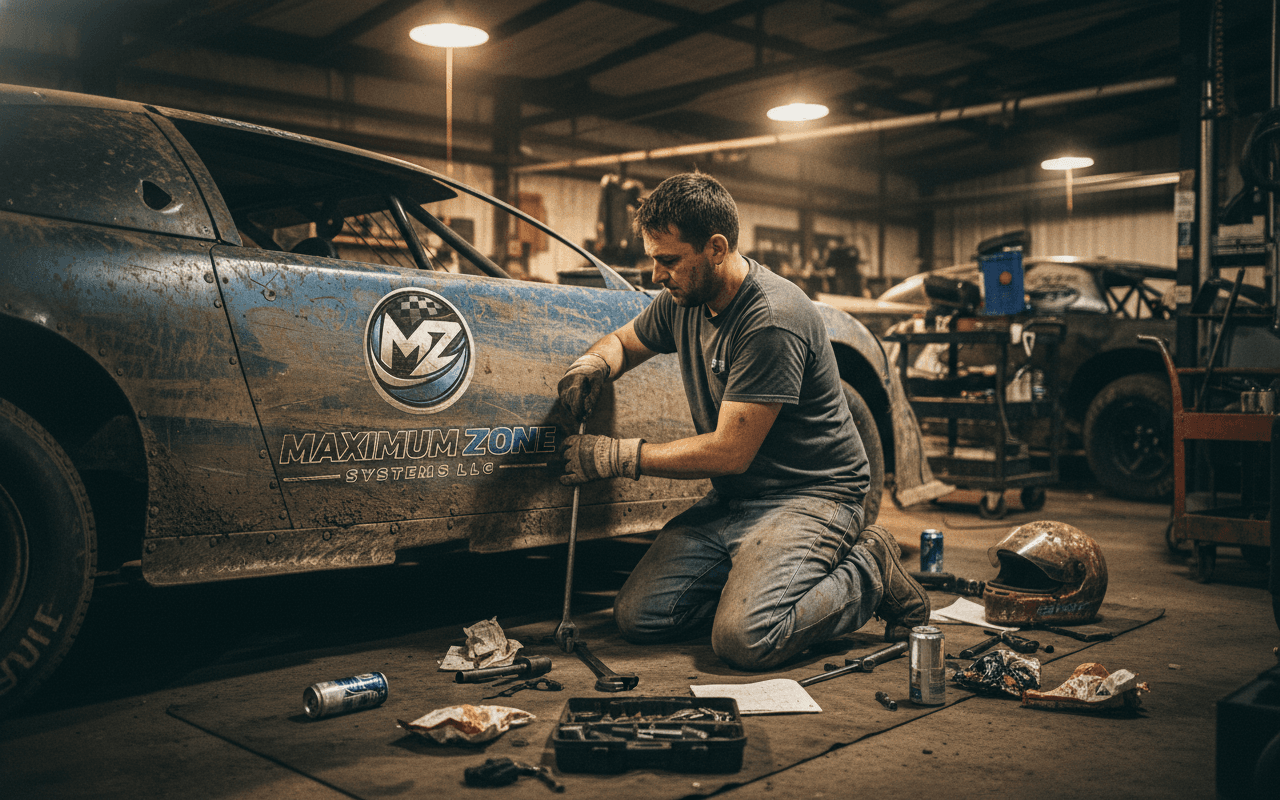
You’ve spent enough Saturday nights sitting in the grandstands, eating track dust, and thinking, "I could do that." Now, you've finally scraped together the cash to buy your first dirt track car. Congratulations. You are about to embark on the most frustrating, expensive, and incredibly rewarding addiction on the planet.
But before you hitch up a borrowed trailer and hand over a stack of hundred-dollar bills to a stranger on the internet, you need a game plan. Buying a used race car isn't like buying a daily driver for your morning commute. You are buying a machine built to run on the absolute ragged edge, slide sideways at 70 mph, and occasionally trade paint with a concrete wall.
If you want to survive your rookie season without going broke or getting hurt, you need to buy smart. Here is your no-BS used race car buying guide.
1. Know Your Class and Read the Rulebook
Do not buy a car until you know exactly what class you are going to run and at which track. Every local 1/4-mile and 1/2-mile oval has its own specific rulebook. A car that is perfectly legal at a track one county over might be completely illegal at your home track.
If you are just starting out, skip the Late Models and A-Mods. You need seat time, not 800 horsepower. Look at the entry-level and intermediate classes:
- Hornets / Sport Compacts: Front-wheel drive, four-cylinder cars. Cheap to build, cheap to fix, and great for learning car control.
- Pure Stocks / Factory Stocks: Rear-wheel drive, heavy, low-horsepower V8s. You'll learn how to manage traction, momentum, and basic chassis roll.
- Street Stocks: The backbone of local dirt track racing. A step up in speed and chassis adjustment, but still relatively affordable for a garage mechanic.
Once you pick a class, print out the rulebook. Read it twice. When you go look at a car, take the rulebook with you to verify the cage rules, engine claims, and suspension limitations.
2. The Real Budget: The Car is Only 50% of the Cost
Here is a hard truth: If you have a $5,000 budget, you cannot afford a $5,000 race car.
The car itself is only about half of what you need to actually go racing on a Saturday night. Before you blow your entire wad on a chassis, you need to budget for the rest of the operation.
What else do you need to buy?
- Safety Gear: Do not cheap out here. You need a quality Snell-rated helmet, a multi-layer fire suit, racing shoes, gloves, and a head-and-neck restraint (HANS device). Expect to spend $1,000 to $2,000 just to keep yourself out of the hospital.
- The Tow Rig: You need a reliable truck and an open or enclosed trailer with heavy-duty tie-downs.
- Tools and Pit Equipment: A good low-profile floor jack, cordless impacts, a tire stagger gauge, precision air pressure gauges, and basic hand tools.
- Spares: Extra wheels, tires, suspension parts, and belts.
Getting a car is just the first check you'll write. Between race fuel, pit passes, tire prep, and busted parts, the costs pile up fast week after week. Do yourself a favor and use the expense tracking tools in Maximum Zone Systems (MZS) from day one. Knowing exactly what you're spending per race keeps you on the track and out of the red.
3. Where to Find Used Race Cars
You won't find a good dirt track car sitting on a used car lot. You have to go where the racers are.
Facebook Marketplace and Racing Groups This is the modern classifieds. Search for specific terms like "dirt track car," "street stock," or "metric chassis." More importantly, join dedicated local and regional racing groups. Groups like "Midwest Dirt Track Classifieds" or "Dirt Racing Swap Meet" are goldmines for complete cars and rollers.
Racing Forums and Websites Sites like RacingJunk.com are still incredible resources, especially for finding cars that are well-documented and sold by serious racers rather than weekend warriors who abandoned a project halfway through the winter.
The Pit Area Walk the pits at your local track after the races are over. Look for "For Sale" signs taped to Lexan windows. Talk to drivers. Even if the guy you talk to isn't selling, he probably knows someone who is upgrading to a new chassis next season and looking to offload their current ride.
4. The Walk-Around: What to Actually Look For
When you go to look at a car, don't let the adrenaline make the decision for you. Bring a tape measure, a strong flashlight, a floor jack, and a buddy who knows how to wrench.
Inspect the Roll Cage This is what will save your life. Look closely at the welds. Are they clean and uniform, or do they look like metal boogers? Look for rust scaling underneath the paint. Check the thickness of the tubing to ensure it meets your track's rulebook requirements.
Measure the Chassis Dirt track cars get wrecked. It’s a fact of life. But you don't want to buy a chassis that is bent beyond repair.
- Measure the wheelbase on both sides to check for squareness.
- Look for "diamonding" in the frame.
- Check the suspension mounting points. Look for wrinkled metal, fresh black spray paint over cracked welds, or bent trailing arms.
Examine the Drivetrain If the car comes turnkey (with a motor and transmission), you need to verify its health.
- Ask to do a compression test or leak-down test.
- Pull the dipstick. If the oil looks like chocolate milk, the head gasket is blown. If it smells burnt, walk away.
- Look at the headers. Extreme discoloration can indicate the motor has been running dangerously lean and hot.
- Check the transmission and rear end. If the car has a quick-change rear end, ask the seller to pull the back cover so you can inspect the gears for chipped teeth or excessive wear.
Check the Plumbing and Wiring A dirt track car vibrates violently. Wiring that isn't properly secured and loomed will eventually chafe against the metal chassis and short out, usually in the middle of a feature race. A rat's nest of electrical tape and exposed wires is a massive red flag. Fuel lines should be braided steel or high-quality racing lines, routed safely away from exhaust heat and moving suspension parts.
5. Red Flags You Must Avoid
Some deals are too good to be true. If you see any of these warning signs, put your wallet away and load your empty trailer back up.
- "It just needs a battery to run." If it was that easy, the seller would have done it to get a higher asking price. Assume the motor is blown or has serious electrical gremlins.
- The seller won't let you inspect it. If they won't let you put it on jack stands or pull a spark plug, they are actively hiding something.
- Missing VINs or Titles (if required). Some entry-level classes require the stock firewall and VIN to be intact. If it's been cut out, the car might be illegal for your class.
- Excessive Bondo. Take a magnet with you. Run it along the body panels and frame rails. If the magnet doesn't stick, you've found a massive patch of Bondo hiding structural damage.
6. Questions to Ask the Seller
Don't be shy. A legitimate racer will respect you for asking detailed questions. Make sure you cover these bases:
- Why are you selling the car? (Upgrading classes is a good answer. "I don't have time" is okay. "I can't get it to hook up" means you're buying their headache.)
- When was the engine last freshened? Get receipts if possible. If they say "it's fresh" but have zero proof, assume it has 50 nights on it.
- What is the current setup? Ask for their setup sheets. You want to know the current spring rates, shock valving, cross-weight percentages, and gearing.
- What spares come with the deal? Negotiate extra wheels, gears, springs, and body panels into the final price.
7. How to Negotiate Like a Racer
Negotiating for a race car isn't like haggling over a used lawnmower. It’s about understanding the value of the parts bolted to the chassis.
- Price out the components: If the seller is asking $6,000 but the motor alone is a verified $4,000 build with only 5 nights on it, you are getting a steal. If the motor is a junkyard pull, the price needs to reflect that.
- Value the spares: Often, a seller is getting out of the class entirely. They don't want to keep a garage full of street stock parts if they are moving to A-Mods. Use this to your advantage. Offer their asking price, but demand they throw in all their spare tires, extra shocks, and that spare transmission sitting in the corner.
- Cash talks: Showing up with a trailer and an envelope full of hundred-dollar bills gives you incredible leverage. A seller is much more likely to drop their price if they know the car is leaving their driveway today.
Time to Go Racing
Buying your first dirt track race car is a massive milestone. Take your time, do your homework, and don't let your emotions drive your wallet. Buy a safe, straight car in a class you can afford, learn how to turn the wrenches, and get ready for the most fun you'll ever have on a Saturday night.
See you at the track.