Building Your Racing Crew: Who You Need & Where to Find Them
Need to find a pit crew for your dirt track racing team? Learn exactly what roles you need on race night and practical ways to recruit reliable crew members.
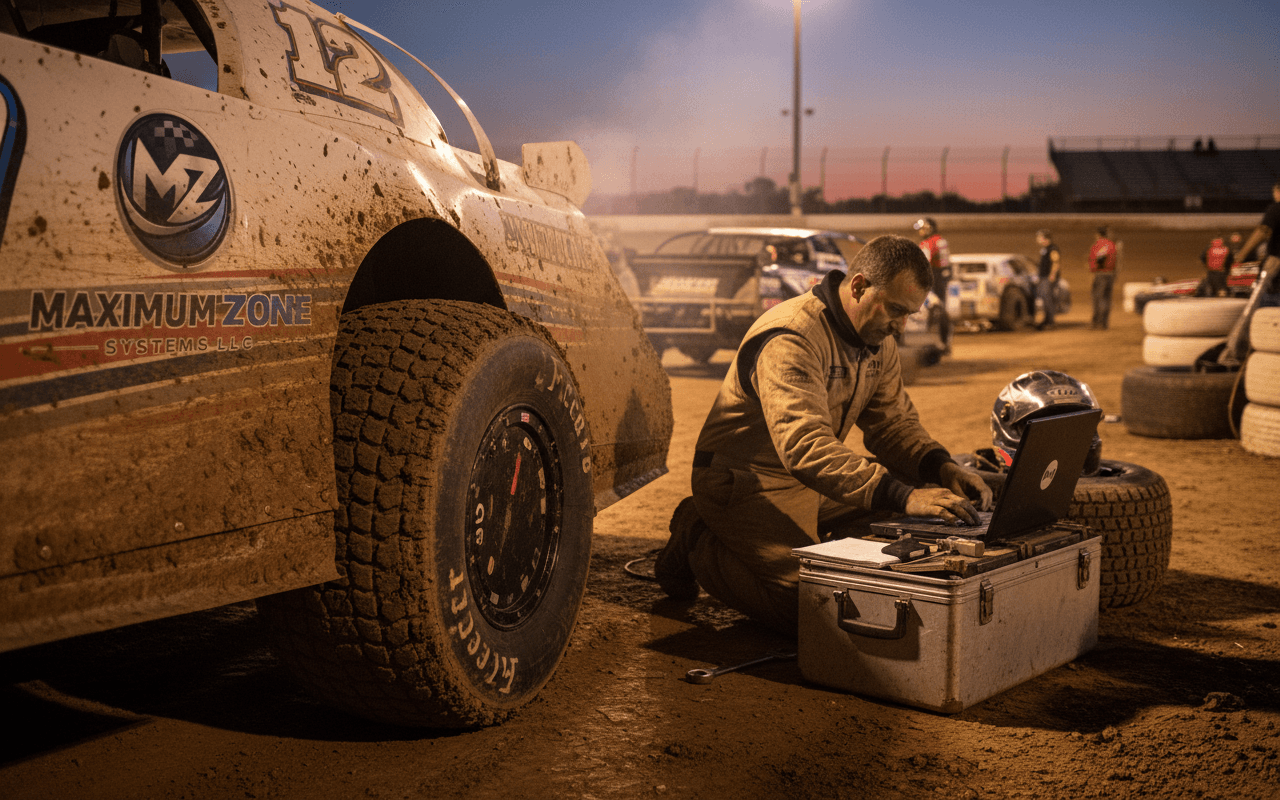
It is 6:30 PM on a Saturday night at your local 1/4-mile bullring. You just pulled off the track after hot laps, the engine is popping, the right rear tire is caked in heavy clay, and your heat race is in exactly twenty minutes.
If you are flying solo, you are about to experience the most stressful twenty minutes of your week. You are frantically checking tire pressures, trying to knock mud off the suspension with a scraper, and trying to remember if you put fuel in the cell—all while strapped into your fire suit, sweating through your helmet.
You cannot do this alone. Dirt track racing is a team sport, even if your name is the only one above the door. If you want to run up front, you need a reliable racing crew.
But building a dirt track team building isn't about hiring a bunch of guys in matching firesuits like you see on Sundays. It is about finding two or three dedicated people who are willing to get their hands dirty on a Saturday night. Here is a practical guide on who you actually need in your pit stall and exactly where to find them.
The Core Roles: Who Do You Actually Need?
When you are just getting started, you do not need a specialized shock specialist, an engine tuner, and an aerodynamics guy. You need reliable people who can handle the basics so you can focus on driving the race car.
Here are the core roles you need to fill:
1. The Car Chief (The Setup Lead)
This is your right-hand man or woman. They do not need to be a mechanical engineer, but they need to know their way around a toolbox and understand your basic baseline setup.
- What they do: Check the stagger, set tire pressures, adjust the panhard bar, and make sure every bolt on the suspension is tight before you roll out for the feature.
- Why you need them: When you come off the track complaining that the car is tight in the center of turns one and two, this person needs to know exactly which adjustment to make while you stay strapped in the seat.
2. The Tire and Mud Specialist
Let's be honest: this is the least glamorous job at the track, but it is arguably the most important. A dirt car can pick up hundreds of pounds of mud during a race, completely throwing off your cross-weight and slowing you down.
- What they do: Scrape mud off the chassis, suspension, and wheels the second the car stops. They also groove, sipe, and grind tires during the week, and manage the bleeder valves on race night.
- Why you need them: A clean car is a fast car. If someone is dedicated to keeping the car light and the tires prepped, you have a massive advantage over the guy pitting next to you who is too tired to scrape his own mud.
3. The Utility Player / Spotter
Depending on your track's rules, you might be allowed to run a radio. If not, this person is your eyes and ears in the pits and the grandstands.
- What they do: Watch the track surface. Dirt tracks change drastically from hot laps to the A-Main. This person watches where the moisture is, where the cushion is building, and where the fast guys are running.
- Why you need them: They manage the tear-offs, fill the fuel cell, grab the right wrenches, and tell you if the track is taking rubber on the bottom groove.
The Recruiting Trail: Where to Find Pit Crew Members
Now you know who you need. But where do you actually find a pit crew? You can't exactly post a listing on a traditional job board and expect a dirt track fanatic to show up. You have to look in the right places.
1. The Grandstands and Infield Fences
Look at the fans who show up to the track two hours before hot laps. Look for the guys wearing faded World of Outlaws shirts who are leaning over the chain-link fence pointing at suspension parts.
- The Approach: Walk up to them. Strike up a conversation about track conditions. Ask them if they ever thought about turning wrenches instead of just watching. A lot of hardcore fans are dying for an excuse to get into the pit area for free, and they will gladly scrape mud for a pit pass.
2. Local Tech Schools and Auto Shop Classes
This is the most underutilized resource for local race teams. Community colleges and high schools are full of young, hungry mechanics who want real-world experience.
- The Approach: Go talk to the automotive instructor. Tell them you run a local dirt track car and you are looking for one or two students who want hands-on experience in motorsports. You will be shocked at how many kids will jump at the chance to put "Pit Crew Member" on their resume.
3. The Pit Area (Other Teams)
Teams fold. Drivers run out of money. Wives tell drivers they have to sell the car. It happens every season. When a team shuts down, there are usually two or three crew guys left without a car to work on.
- The Approach: Keep your ear to the ground. If you hear a local driver is hanging up his helmet, go talk to his crew. They already know the routine, they already have the tools, and they already know what time the gates open.
4. Track Bulletin Boards and Facebook Groups
Almost every local track has a dedicated Facebook group for drivers and teams.
- The Approach: Don't just post, "Need help." Be specific. Post: "Looking for a tire guy for a B-Mod team running Saturday nights at [Track Name]. Shop nights are Tuesdays. I buy the beer and the pit passes." Being specific weeds out the flakes.
5. Friends and Family (With a Catch)
This is where everyone starts. Your brother, your buddy from work, your cousin.
- The Approach: Be careful here. Just because they like drinking beer in your garage on a Tuesday doesn't mean they want to bust their knuckles on a hot engine block on a Saturday night. Set clear expectations up front. Tell them exactly what you need them to do.
How to Keep Your Crew Coming Back
Finding a crew is only half the battle. Keeping them coming back week after week is the real challenge. Remember, these guys are giving up their weekends and their evenings to help you chase a plastic trophy and a tiny payout. You have to treat them right.
Communicate Like a Pro
Nothing frustrates a volunteer crew member more than showing up to the shop and not knowing what to do, or waiting an hour for the trailer to show up on race day.
When you start adding people to the mix, communication gets complicated fast. You don't want a text chain blowing up with a dozen confused messages. Using the team management tools in Maximum Zone Systems (MZS) lets you drop the weekend schedule, shop night tasks, and setup notes in one place. Your crew just checks their phone, sees what needs to be done, and gets to work. No confusion, no wasted time.
Feed Them Well
This is the golden rule of local dirt track racing. Your crew works for free, so the least you can do is keep them fed.
- Shop Nights: Order pizzas. Fire up the grill. Have a cooler full of cold drinks.
- Race Nights: Don't make them buy overpriced track food. Pack a cooler with sandwiches, water, and sports drinks. After the races, stop at the local diner and pick up the tab.
Share the Glory (And Take the Blame)
When you win the heat race, make sure you mention your crew in the victory lane interview. When you park it in the winner's circle, make sure they are in the photo. Let them hold the big check.
Conversely, when you miss the setup, put the car into the turn three wall, and load up early—take the blame. Do not yell at your tire guy because you drove it in too deep. Win as a team, lose as a team.
Respect Their Time
If shop night starts at 6:00 PM, you better be in the shop at 5:45 PM with the lights on and the air compressor running. Don't make your volunteers wait on you. Have a list of tasks ready to go. If the car is ready early, send them home to their families.
The Final Checkered Flag
Building a reliable racing crew doesn't happen overnight. You will go through a few guys who realize that scraping heavy clay off a chassis at 1:00 AM isn't as glamorous as they thought.
But if you look in the right places—the grandstands, the local tech schools, and the pit area—you will eventually find the right group of dirt-track lifers. Treat them with respect, keep the communication clear, and keep the cooler full.
Do that, and you will never have to scrape your own mud between heat races again.