Tow Vehicle Maintenance: Don't Let Your Truck Strand You
Your race car is prepped, but what about your hauler? Master tow vehicle maintenance to prevent highway breakdowns. Check tires, transmission, and cooling.
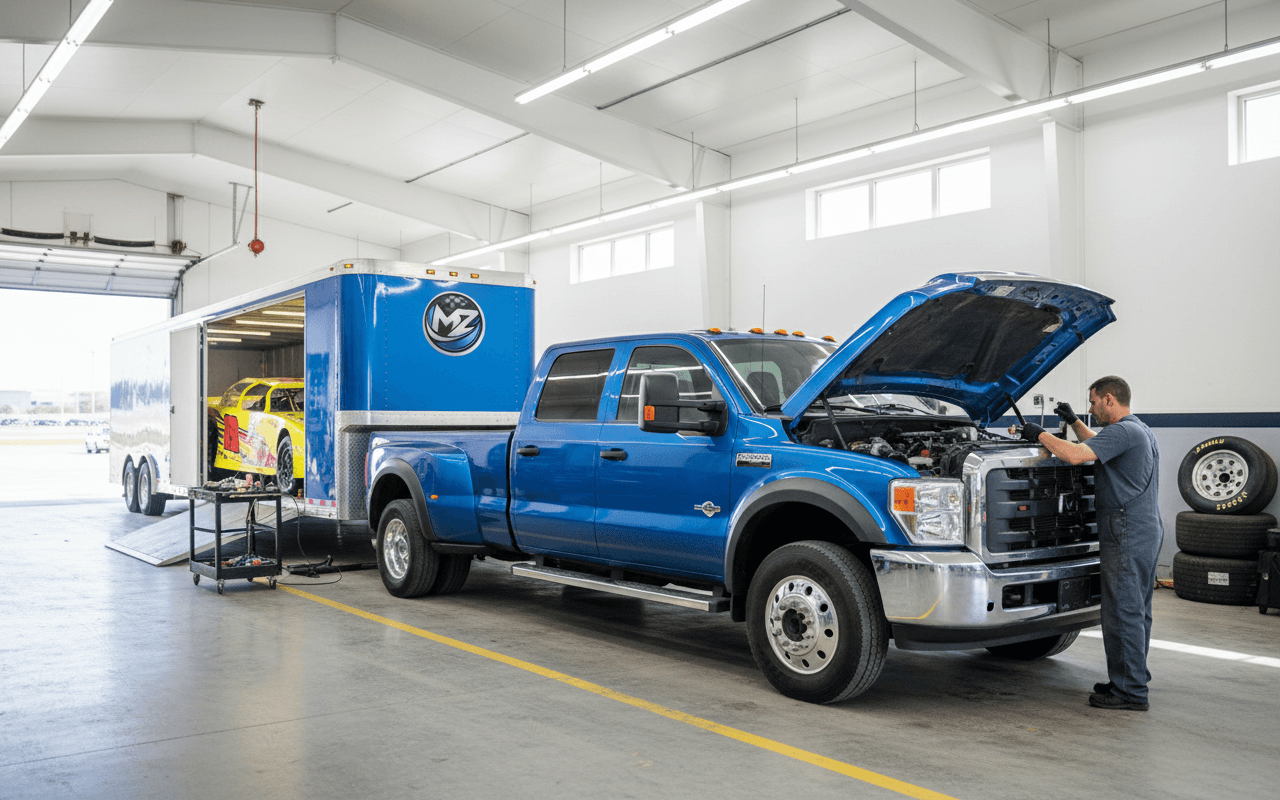
Towing a 28-foot enclosed trailer loaded with a Late Model, four shock racks, an ATV, and a toolbox puts your truck through hell. You are dragging 10,000 to 15,000 pounds of dead weight down the highway. That requires a severe-duty mindset.
Factory maintenance schedules are written for guys hauling groceries, not race teams dragging aerodynamic parachutes through the Appalachian mountains. If you wait for a dashboard light to tell you something is wrong, you are already broken down.
Here is the technical breakdown of how to bulletproof your racing truck and keep your operation moving.
Transmission: Managing the Heat
Heat is the absolute number one killer of automatic transmissions. When the torque converter unlocks on a steep grade, internal fluid temperatures spike instantly.
Normal operating temperature is between 170°F and 200°F. Once you cross 220°F, the fluid begins to oxidize and varnish forms. At 240°F, internal seals begin to harden and leak. At 260°F, your transmission is actively dying and clutch plates are slipping.
Install a pillar-mounted digital pyrometer or use a plug-in OBD2 monitor. Factory dash gauges are heavily dampened "dummy gauges" that stay perfectly in the middle until the transmission is already overheating.
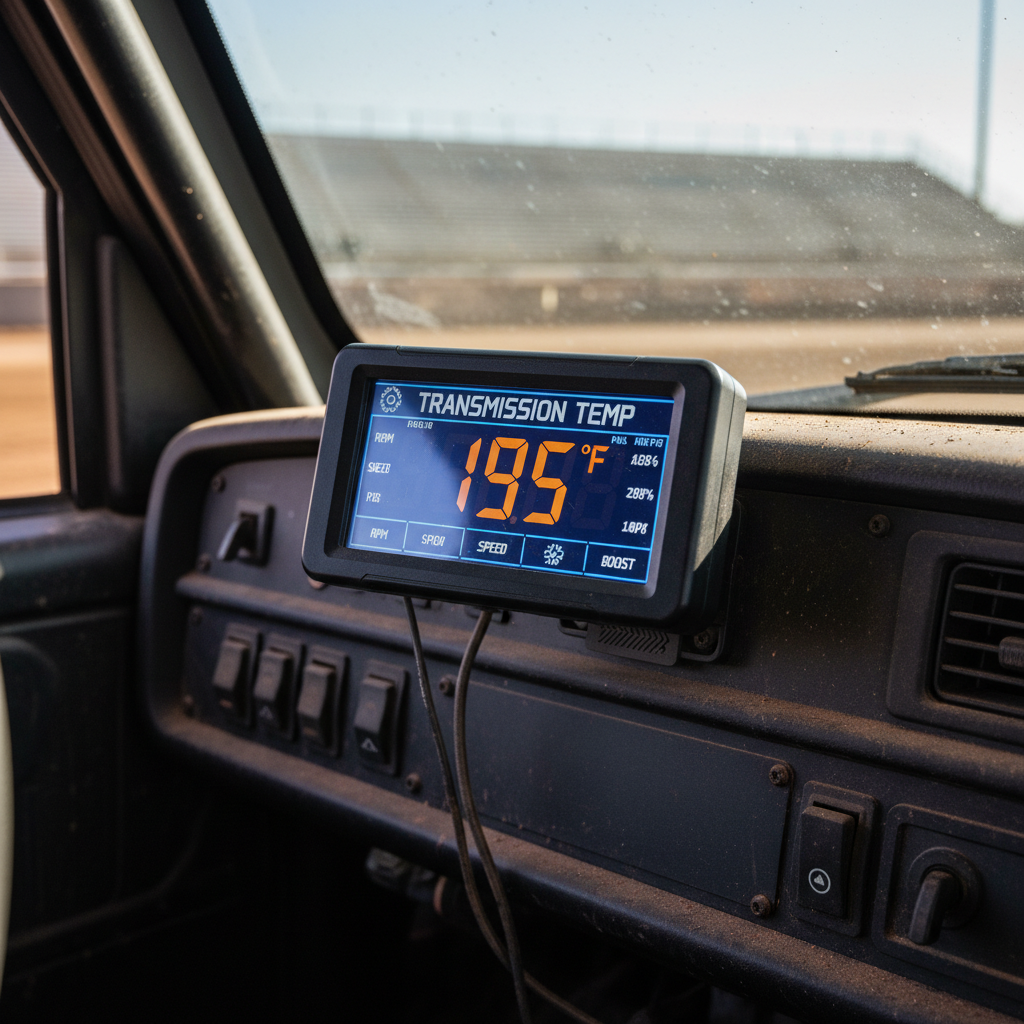
Change your transmission fluid and filter every 30,000 miles. Towing is the exact definition of "severe duty" in your owner's manual. Don't just do a pan drop; get a full fluid exchange to push out the burnt fluid hiding inside the torque converter and cooler lines.
Brakes: Stopping the Mass
Getting 15,000 pounds rolling is easy. Stopping it from 70 mph when a tractor-trailer locks up in front of you takes massive kinetic energy conversion.
Your truck's brake fluid is hygroscopic—it absorbs water from the ambient air over time. Factory DOT 3 fluid boils at 401°F when dry, but drops to 284°F with just 3.7% water content. Boiling fluid introduces compressible gas into the brake lines, resulting in a terrifying dead pedal.
Flush your brake fluid completely every two years. Upgrade to a high-quality DOT 4 fluid for a significantly higher boiling point.
Calibrate your trailer brake controller gain. At 25 mph on a flat, empty road, manually engage the trailer brakes using the slider switch. They should drag the truck to a hard, aggressive stop without locking the trailer tires. If the truck's front brakes are doing all the work, you will glaze your brake pads in a single trip.
Tires: The 10-Ply Rule
Violent trailer sway and highway blowouts usually stem from inadequate tire specifications. Half-ton trucks running standard P-metric (Passenger) tires have soft, flexible sidewalls that physically roll under heavy tongue weights.
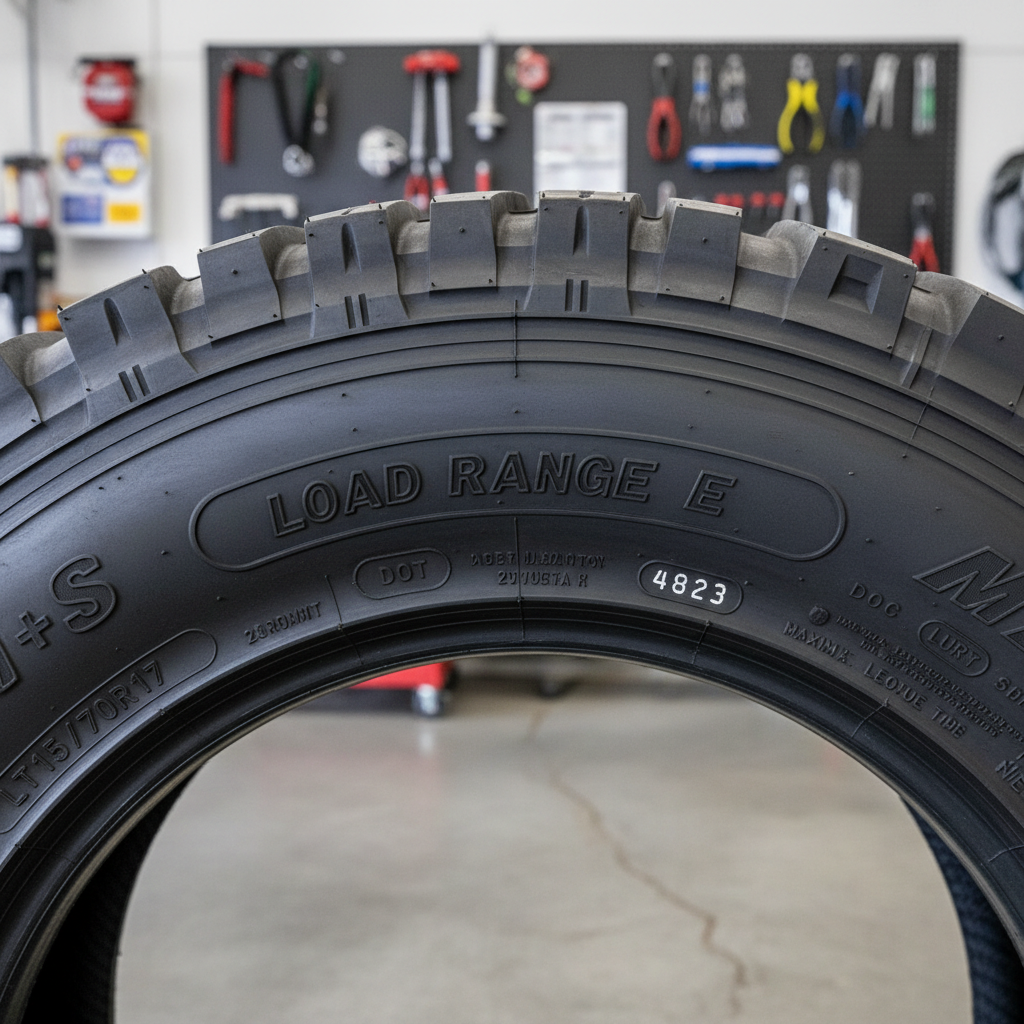
You need LT (Light Truck) tires with a Load Range E. These are 10-ply rated tires built with incredibly stiff sidewalls designed to handle 80 psi and heavy lateral loads.
Run your rear truck tires at the maximum cold pressure listed on the sidewall (usually 80 psi) when towing. Drop the front tires to 65 psi to maintain proper steering feel and prevent the truck from wandering in highway ruts.
Check the four-digit DOT date code stamped on the sidewall. The first two digits are the week; the last two are the year (e.g., 4121 is the 41st week of 2021). If your tires are over six years old, replace them immediately. UV rot kills towing tires long before the tread wears down to the wear bars.
Suspension & Hitch: The Connection Point
Your truck and trailer are joined by a 2-inch piece of steel. If your hitch geometry is wrong, your truck's front suspension unloads, completely ruining your steering caster and braking capability.
Target a tongue weight of 10% to 15% of your total loaded trailer weight. If your enclosed trailer weighs 10,000 pounds, you need 1,000 to 1,500 pounds sitting directly on the ball. Too little tongue weight causes violent, uncontrollable trailer sway at highway speeds.
Inspect your truck's receiver hitch pin hole. Over thousands of miles of push-pull braking forces, the circular hole will elongate or "egg out." If there is more than 1/8-inch of slop, the receiver needs to be cut off and replaced.
Check your trailer's leaf spring shackles and equalizer links. Factory plastic bushings wear out in less than 10,000 miles. Upgrade to wet bolts (greaseable bolts) and heavy-duty bronze bushings to keep the trailer tracking straight.
Cooling System: Under Pressure
Towing a box trailer at 70 mph requires your engine to produce constant, high boost and heavy fuel flow. This generates massive thermal loads that your cooling system has to reject.
Your radiator cap is the unsung hero of the cooling system. A standard cap holds 15 to 18 psi of pressure. Every pound of pressure raises the coolant boiling point by 3°F. If the internal spring weakens and drops to 10 psi, your coolant will boil over during a long uphill pull.
Test or replace your radiator cap every two years. It's a $15 part that saves $15,000 engines.
Listen for your mechanical fan clutch. When engine temps hit roughly 215°F, you should hear the fan lock up with a massive roar that sounds like a jet engine. If the engine gets hot but the fan stays quiet, the viscous fluid inside the clutch has leaked out. Replace it before your next trip.
The Hauler Maintenance Cheat Sheet
Screenshot this severe-duty schedule and tape it to your toolbox.
| Component | Severe Duty Interval | Critical Spec/Action |
|---|---|---|
| Engine Oil | 5,000 miles / 200 hours | Send sample to lab for wear metals |
| Transmission Fluid | 30,000 miles | Full exchange, check for burnt smell |
| Brake Fluid | 24 months | Flush with DOT 4 |
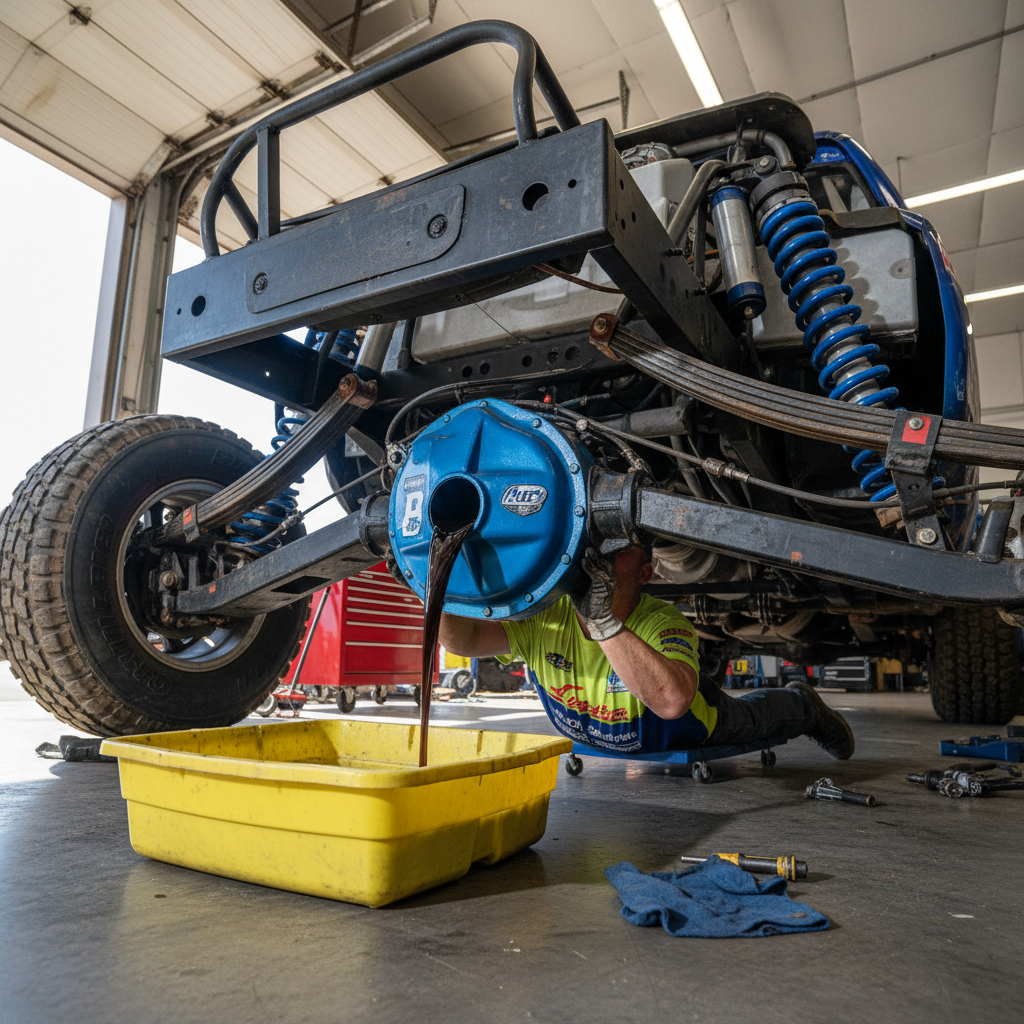
| Differential Fluid | 30,000 miles | 75W-140 Synthetic, check for metal fuzz |
| Fuel Filters (Diesel) | 10,000 miles | Drain water separator monthly |
| Coolant | 50,000 miles / 3 years | Test freeze point and pH levels |
The thing most racers miss: Rear differential fluid degrades faster than engine oil when towing. The ring and pinion gears are under constant sheer stress, generating extreme heat with zero active cooling. Pull the fill plug and stick your finger in—if it smells like burnt hair or feels gritty, change it immediately.
Track Everything in One Place
You wouldn't run a 40-lap feature without knowing exactly how many nights are on your right rear tire. Apply that exact same discipline to your tow vehicle.
Logging this data in a greasy notebook that lives in the glovebox works right up until you lose the notebook. Instead, use the maintenance tracking feature inside Maximum Zone Systems. You can easily set up your truck and trailer as custom profiles right next to your race car setup sheets.
Set automated alerts for your 30,000-mile transmission flushes and 5,000-mile oil changes. Let the software tap you on the shoulder before a part fails, rather than guessing when you last changed the fuel filters.
Treat your hauler like it's the most important piece of equipment in your fleet. Because it is.
Takeaway: A flawlessly prepped race car means absolutely nothing if it's sitting on the shoulder of Interstate 80.