Race Trailer Organization: Setup Systems That Save Time
Stop digging through bins while your heat race lines up. Learn practical race trailer organization tips to speed up your pit area and save time on race night.
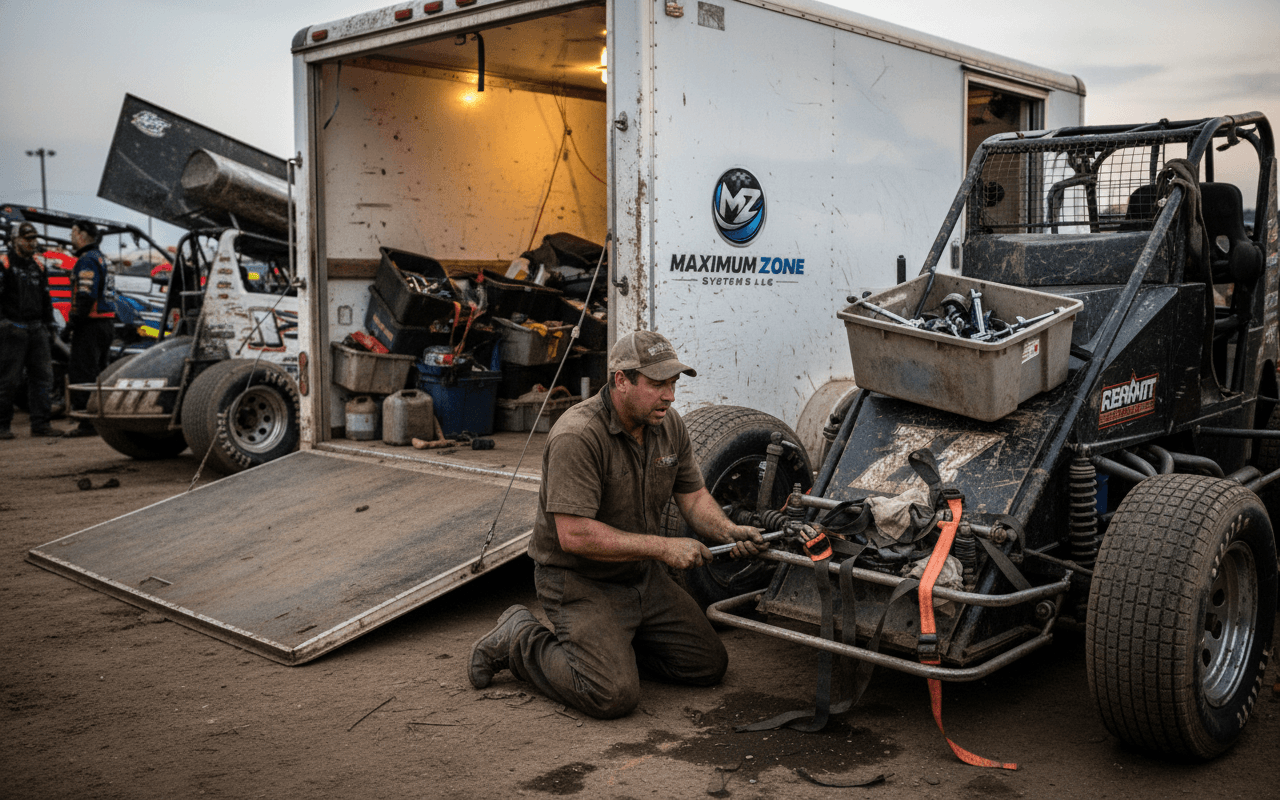
You’ve been there. You pull off the track after your heat race with a bent right front tie rod. You’ve got maybe ten minutes before the B-main gets called to staging. You sprint to the trailer, drop the door, and look at a mountain of unorganized plastic bins, loose tools, and tangled ratchet straps.
Instead of fixing the car, you spend five minutes looking for the right length aluminum tube and a 3/4-inch wrench. That’s how you lose races in the pits.
Good race trailer organization isn't about making your rig look like a million-dollar World of Outlaws hauler. It’s about building a system that saves you time, eliminates stress, and keeps your head in the game. When the pressure is on, you need to know exactly where every tool, part, and quart of oil is sitting.
Here is how you build a racing trailer setup that actually works on a Saturday night at your local bullring.
The "Zone" System for Pit Area Organization
Stop throwing things in the trailer wherever they fit. Treat your trailer like a functional workspace by dividing it into specific zones. When you organize by zone, you naturally speed up your workflow.
- The Thrash Zone (At the Side Door): This is for items you need instantly. Tire gauge, pyrometer, cordless impact, quick jack, and your primary crash-cart toolbag. If you have to climb into the trailer to check tire pressure, your setup is wrong.
- The Spares Zone (Mid-Trailer): This is where you keep suspension parts, spare shocks, springs, and gears. You need access to these between races, but not in a 30-second panic.
- The Fluids Zone (Front or Cabinets): Oil, gear lube, brake fluid, engine sweep, and funnels. Keep these low to the floor in case of a spill, and grouped together so you aren't hunting for brake fluid when bleeding a caliper.
- The Driver Zone: Helmet, HANS, tear-offs, gloves, and radio gear. Keep this separate from greasy car parts. Give yourself a clean spot to gear up.
By establishing strict zones, your crew never has to ask, "Hey, where is the gear lube?" They already know it's in the Fluids Zone.
Tool Placement: The 30-Second Rule
In a dirt track pit stall, tools have legs. They walk away, get buried under tires, or end up sitting on the back bumper of the race car. Your racing trailer setup must dictate exactly where tools live.
Implement the 30-Second Rule: You should be able to locate and grab any primary tool in under 30 seconds.
- Ditch the massive roll-around box: Unless you have a 32-foot stacker, a massive 54-inch heavy-duty toolbox takes up too much floor space and adds unnecessary weight. Instead, use a smaller, targeted pit cart or mount heavy-duty drawers directly into your trailer's workbench.
- Color-code your sockets: You work in low light. When you're thrashing under the lights of a 3/8-mile track, reading the tiny stamped numbers on a socket is impossible. Paint a stripe on your most used sizes (e.g., 9/16, 1/2, 3/4) or use colored tape.
- Magnetic strips are your best friend: Mount heavy-duty magnetic tool holders on the trailer walls near the door. Slap your most-used wrenches, pliers, and screwdrivers up there. When the night is over, a quick glance tells you if a wrench is missing.
- Cordless tool station: Build or buy a dedicated rack for your cordless impacts, grinders, and drills. Mount the chargers right next to the rack and wire them to a single power strip. Plug in the trailer generator, flip one switch, and all your batteries are charging.
Parts Storage: See It, Grab It, Bolt It On
Cardboard boxes are the enemy of pit area organization. They get wet, they rip, and you can't see what's inside them. If you want to be fast, you need transparency and labels.
Clear Bins and Bold Labels
Invest in heavy-duty clear plastic storage bins. Group your spare parts logically. Don't mix front suspension parts with fuel system fittings.
- Bin 1: Heim joints, jam nuts, spacers.
- Bin 2: Brake pads, master cylinder rebuild kits, spare lines.
- Bin 3: Carburetor jets, gaskets, throttle return springs.
Label the front and top of every single bin with a thick permanent marker and bright tape. When you're screaming over the sound of 410 Sprint Cars, you need to point at a bin and have your buddy grab it without hesitation.
Tube Storage
Radius rods and tie rods are a nightmare to store. They roll around and get bent. Build a simple rack out of PVC pipe cut into 6-inch lengths. Mount the PVC pipes vertically against the trailer wall. Drop your spare rods into the pipes and write the length (e.g., 11.5", 12", 13") on the outside of the PVC. Instant, organized access.
Track Your Spares
There is nothing worse than grabbing a bin for a spare right-front shock, only to realize you used it two weeks ago and forgot to replace it. This is where a little technology goes a long way. Using the inventory management tools inside Maximum Zone Systems (MZS) lets you track exactly what parts you have in the trailer directly from your phone. When you use your last set of tear-offs or bolt on that spare birdcage, just tap it out of your MZS inventory. It automatically builds a shopping list for Monday morning so you never show up to the track empty-handed.
Spare Tire Access and Stagger Management
Dirt track racing revolves around tires. Grooving, siping, checking stagger, and setting pressures takes up 50% of your night. Your tire setup needs to be dialed.
The Overhead Tire Rack
If you don't have an overhead tire rack, build one. Tires eat up floor space faster than anything else. Mount the rack high enough that you can walk under it, but low enough that you don't break your back pulling a mounted right rear down in a hurry.
Organize by Corner and Compound
Don't just shove tires onto the rack randomly. Group them logically. Keep your Right Rears together, Right Fronts together, etc. Arrange them by compound (soft to hard) so you aren't digging through the stack looking for that medium compound when the track suddenly slicks off.
The Tire Prep Station
Dedicate a small section of your trailer specifically to tire prep. Keep your grooving iron, extra blades, siping tool, tire tape, and chalk in one specific drawer or wall-mounted bin right next to the tire rack. When you need to cut a new edge on a tire after hot laps, everything is within arm's reach.
Pre-Mark Stagger
Before you load the trailer at the shop, measure the circumference of every mounted tire. Write the size in large numbers on the tread face with a white tire crayon (e.g., 86 1/4"). When you need to make a quick stagger change before the feature, you aren't wasting time wrapping a tape measure around five different tires.
The Pre-Race Checklist: Never Leave It Behind
The best race trailer organization in the world won't help you if the part you need is sitting on your workbench back at the shop. Leaving essential gear behind is a rookie mistake that costs you money and finishes.
You need a laminated loading checklist permanently mounted to the inside of your trailer door.
What Goes on the Checklist?
Break your checklist down into categories to make loading faster:
- The Car: Jack stands removed, strapped down correctly, battery disconnected.
- Fuel & Air: Fuel jugs full, generator gassed up, air compressor drained and ready, nitrogen bottle full.
- Tires: Primary set, backup set, specific stagger options for the track you're visiting.
- Fluids: Engine oil, gear lube, brake fluid, water/coolant, power steering fluid.
- Driver Gear: Helmet, suit, gloves, shoes, head-and-neck restraint, radio charged.
- Spares: Front end parts, rear end parts, spare belts, spare battery.
Make it a strict rule: The trailer door does not close until every single item on that list has been physically touched and verified by you or your crew chief. No guessing, no "I think I put it in there." Touch it, check it off, and close the door.
Keep the Floor Clear
Here is a golden rule for any racing trailer setup: The floor is lava.
Every time you leave an air hose uncoiled, a jack sitting in the middle of the aisle, or an empty fuel jug by the door, you are creating a tripping hazard and slowing yourself down.
- Mount an automatic retractable air hose reel near the rear door.
- Install dedicated brackets to lock your floor jack against the wall.
- Use bungee cords or E-track straps to secure fuel jugs tightly into corners.
When you pull into the pits, you want a clear walkway from the ramp door all the way to the front cabinets. If you have to step over a pile of dirty rags and a loose sway bar to get to your toolbox, you are wasting energy.
Maintenance: The Sunday Unload
Trailer organization isn't a one-time job; it's a weekly habit. How you treat your trailer on Sunday morning dictates how fast you will be on Saturday night.
When you get back to the shop, don't just unhook the rig and walk away. Unload the empty fuel jugs. Throw away the empty brake cleaner cans. Put the tools back in their designated spots. Sweep the floor. Restock the zip-ties and duct tape.
Resetting the trailer immediately ensures that when Wednesday night rolls around and you're thrashing to put the engine back in the car, your trailer is already prepped and ready for the weekend.
The Checkered Flag
At the local level, dirt track races are often won and lost in the pit area. A chaotic pit stall leads to rushed decisions, missed setups, and loose bolts. A highly organized trailer keeps your mind clear so you can focus on what actually matters: reading the track, adjusting the setup, and driving the car.
Take one weekend to completely empty your trailer. Throw away the junk, establish your zones, label your bins, and put your tools where they belong. You’ll be amazed at how much faster your pit stops become.
Takeaway: Stop treating your race trailer like a storage shed. Treat it like a high-performance workspace. Organize by zones, label everything, and use a strict loading checklist. When the pressure is on and you have three minutes to make the call, a dialed-in trailer setup is your greatest competitive advantage.