How to Run Your Dirt Race Team Like a Business
Learn why adopting a professional racing mindset and treating your local race team like a business attracts sponsors, saves money, and makes Saturdays better.
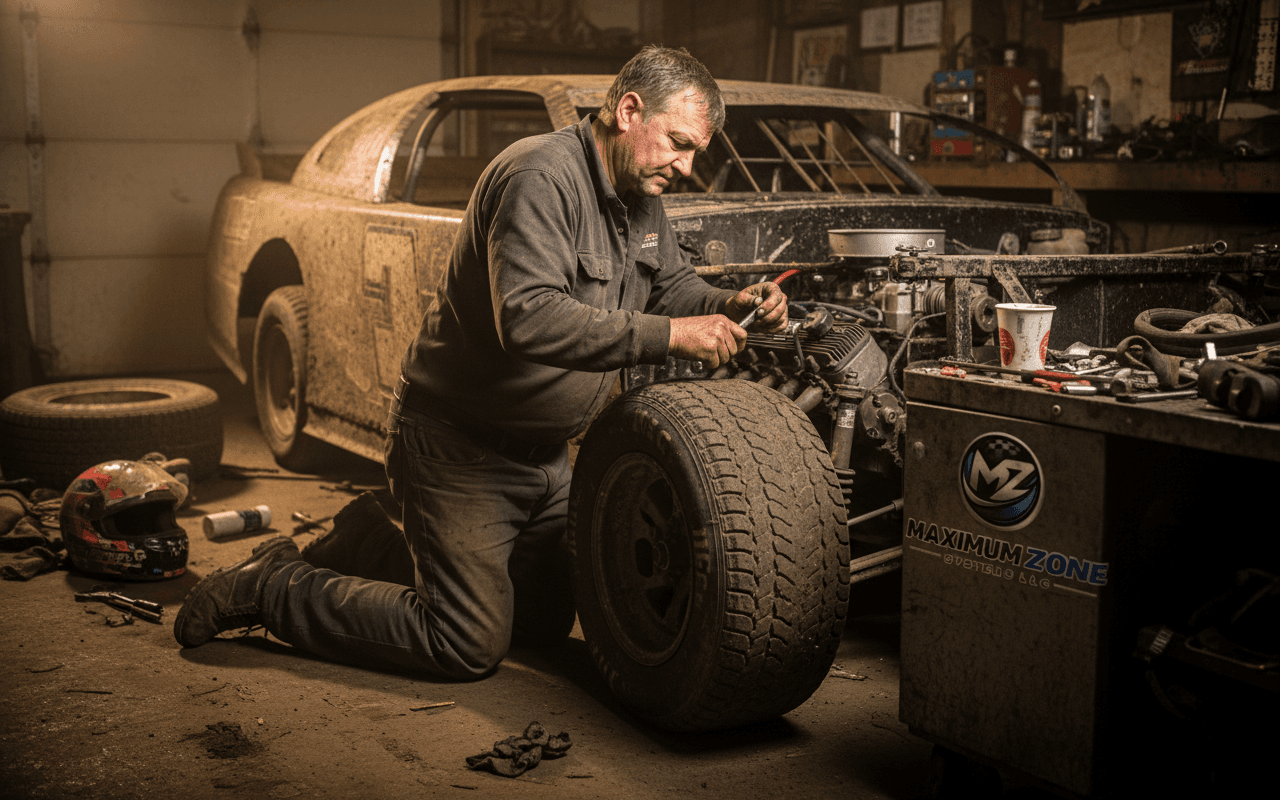
You spend four nights a week covered in grease, busting your knuckles to get the car ready for hot laps on Saturday night. You do it because you love dirt track racing. But let’s be honest—this "hobby" takes up more time and money than a full-time job.
If you treat your race program like a weekend hobby, it will constantly drain your bank account. But if you start treating your race team business like an actual operation, you change the entire game.
Adopting a professional racing mindset doesn't mean you need a 53-foot toterhome or a PR rep in a tailored suit. It means getting organized. It means tracking your money, managing your parts, and delivering actual value to the people who put their logos on your doors.
Here is exactly how to run your local dirt track team like a real business, so you can save money, attract better sponsors, and actually enjoy your Saturday nights at the track.
Shift Your Mindset: Hobby vs. Business
A hobbyist guesses. A business owner knows.
When you run a hobby, you buy a right rear tire when you notice the old one is junk. You ask a buddy for $500 to put his logo on the hood, and you hope you have enough cash for diesel on Friday afternoon.
When you run a business, you have a system. You know your exact cost-per-race. You know the lifecycle of your shocks. You understand that the local hardware store owner who gave you $1,000 expects to see a return on that investment.
Making this shift in your racing operations is the single biggest difference between the guys who race for five years and go broke, and the guys who are still competitive twenty years later. It takes the stress out of the financial side so you can focus on hitting your marks on a slick 3/8-mile oval.
Master Your Racing Operations Budget
You can't run a business if you don't know your numbers. Most local racers are terrified to look at what they actually spend. You need to face the math.
Start by calculating your baseline operating cost for a single night of racing. Write down everything:
- Pit passes: $35 x 4 crew members = $140
- Race fuel: 10 gallons at $12/gal = $120
- Tires: One new right rear = $175
- Diesel for the hauler: $80
- Consumables: Oil, tear-offs, brake clean, zip ties = $40
- Food and drinks: $60
In this example, your baseline cost just to pull through the pit gate is $615 a night. If you run a 20-race schedule, that's $12,300—and that doesn't include engine rebuilds, crash damage, chassis updates, or winter maintenance.
Once you know your baseline, set up a dedicated bank account for the race team. Stop mixing your grocery money with your tire money. When sponsor checks come in, they go into the team account. When you buy parts, you use the team debit card. This simple separation forces you to treat the team finances with respect.
Racing is unpredictable. Someone spinning out in front of you in turn two can cost you $2,000 in front-end parts. A business plans for emergencies; a hobbyist puts it on a high-interest credit card. Try to keep a reserve fund in your team account specifically for crash damage.
Track Your Inventory Like a Parts Store
If a local auto parts store didn't track their inventory, they would go out of business in a month. Yet, how many times have you dug through the trailer looking for a specific gear set, only to realize you loaned it out three weeks ago?
Your parts are assets. Treat them like it.
- Log your tires: Buy a cheap silver Sharpie. Write a number on every tire you buy and log how many heat cycles and feature laps are on it. Stop guessing if a tire is "probably still good."
- Track your maintenance: How many nights are on your oil? When were your shocks last dynoed? Keep a logbook in the trailer.
- Organize the hauler: Label your bins. Know exactly where your spare radius rods, heims, and springs are located. When you crash in a heat race and have 15 minutes to fix a bent front end, you don't have time to play hide-and-seek.
- Manage your tools: It's not just parts; it's tools. How many 1/2-inch wrenches have you lost in the dirt at midnight? Mandate that every tool goes back in its slot before the hauler door closes.
When you know what you have, you stop buying duplicates. You stop throwing away tires that still have life in them. That is real money staying in your pocket.
Deliver Real Value to Your Sponsors
This is where the professional racing mindset really pays off. A hobbyist asks for a handout. A business owner offers a partnership.
Local businesses don't give you $1,000 because they like your paint scheme. They do it because they want exposure, foot traffic, and association with a winner (or at least a professional).
Treat your sponsors like investors. Send them weekly updates. If the local pizza shop sponsors you, make sure your crew eats there. Take the car to their parking lot for a Saturday afternoon display. Give them shoutouts on your social media that actually tag their business page, not just a generic "thanks to my sponsors" post.
When you secure a sponsor, clearly outline what they get. Fulfilling these promises builds trust, and trust leads to renewals next season.
Managing these relationships can get overwhelming when you're busy turning wrenches, which is why keeping everything organized is critical. Using a tool like the sponsor management feature in Maximum Zone Systems (MZS) lets you track exactly who gave you what, when their contract is up, and reminds you to send them those crucial updates and ROI reports. It’s an easy way to look like a top-tier professional without needing a dedicated PR person.
Market Your Team Every Saturday Night
Your race car is a 100-mph billboard. Your pit area is your storefront.
If your car is covered in mud from last week's hot laps, your fenders are still caved in, and your crew is screaming at each other in the pits, what message does that send? It tells fans and potential sponsors that you are an amateur.
- Keep it clean: Wash the car. Wipe down the interior. Even if you're running a 10-year-old chassis, a clean car looks fast and professional.
- Dress the part: You don't need custom-embroidered crew shirts, but having your guys in matching, clean, $15 black t-shirts looks infinitely better than four guys in ripped, greasy street clothes.
- Be approachable: When the pits open after the feature, stand by the car. Let kids sit in the seat. Hand out cheap hero cards (you can print 500 of them for under $100). The fans in the grandstands are the customers of your sponsors. Treat them well.
Build Systems to Save Your Sanity
A real business runs on systems, not memory. If your entire racing operations plan lives in your head, you are going to burn out.
Create a weekly checklist to keep the team on track:
- Sunday: Wash the car, inspect for damage, scale it.
- Monday: Order parts, drop off tires.
- Tuesday: Maintenance (oil, valves, nut-and-bolt the chassis).
- Wednesday: Mount tires, set stagger.
- Thursday: Load the trailer, prep the fuel.
- Friday: Rest and review your setup notes.
When you have a system, you aren't thrashing at 3:00 AM on Saturday morning. You are sleeping. And a well-rested driver is a faster driver.
The Bottom Line
You might not be racing for a living, but your checkbook doesn't know the difference. The moment you stop treating your dirt track program like a weekend hobby and start treating it like a race team business, everything changes.
You will waste less money. You will break fewer parts. You will attract sponsors who actually want to cut big checks, and most importantly, you will have a lot more fun when you pull into the track on Saturday afternoon.
Takeaway: Stop guessing and start tracking. Know your baseline nightly cost, organize your inventory, and treat your sponsors like true business partners. A professional mindset in the garage equals better results on the track.